
If a single breath could improve your whole life, would you take that breath?
That text appears alternately with another message — Life is hard … we want to help — on the website for IntegratedInterventions.com, a landing page that introduces the body-based techniques taught by Deborah Gabriel, Ph.D., and trained Process Leaders to help inspire people to live easier, more peaceful, and more pain-free lives through meditation, mindfulness, and releasing damaging emotions.
Gabriel, a woman with an easy smile and a warm sense of humor, said she came to meditation reluctantly and only after repeated nudges from the universe.
But when she finally listened, she embarked on the journey of a lifetime, from two trips to India and years of study with a cherished teacher to academic deep dives into Eastern philosophy and Western brain science.
From a young age, Gabriel had been tuned into others’ suffering in the world. As an adult, after more than a decade of focused study and self work, she realized she had the tools and experiences to help others – regardless of what they believed or where they were starting – and created The Kinder Life Foundation, a federally recognized church, and Integrated Interventions, the organization’s secular arm.
“The Kinder Life Foundation is a non-profit organization that, in service of our mission of promoting personal and global peace, provides education in the use of highly effective body-based tools for reducing stress, conflict, and unpleasant emotions,” Gabriel explained. “The Foundation is spiritually-centered, but the classes are taught in a secular format, through a secondary program, called Integrated Interventions, so that everyone, with or without spiritual background or interest, can benefit from having a set of techniques they can use anytime to reliably improve their quality of life.”
For the curious, the Foundation offers a Kinder Life Introductory Integrated Interventions Class (KLIIIC) – a free, 2-hour session that teaches two simple body-based techniques: an ancient yogic breathing called Nadi Shodhana and the Foundation’s own 10-minute (or more) Simple Breath Meditation®.
The two techniques are easy to learn, simple to practice, and have decades of research to back up their effectiveness, Gabriel said. The Kinder Life Foundation offers KLIIICs in various locations throughout the Puget Sound area that people can attend in person or tune into remotely.
No fancy gear, no charge, and no follow-up commitment required.
In exchange for putting in the two hours to learn the techniques – and then as little as 15 minutes each day to practice – people can start to build an inner source of equanimity that they can access anywhere.
“The benefits of a quiet mind cannot be overstated,” Gabriel said. “When we are used to having a quiet mind through the practice of meditation, whenever anything comes up that would otherwise hook us or tweak us or make us respond emotionally, we’re so accustomed to the state of peace and quiet mind that we’re unwilling to be hooked or jogged out of that.”
Gabriel believes that interventions are only useful if they can be easily incorporated into people’s busy and over-stressed lives. She and her Process Leaders have successfully taught the techniques to people with diverse life circumstances, from veterans with PTSD to neurodivergent individuals.
Gabriel spoke with Compassionate Coexistence about the transformative power of meditation, her thoughts on meditation apps, tips for finding a legitimate teacher, group vs. solo meditation, and much more.
The following interview has been edited for length. References to the Divine are capitalized per Gabriel’s request, as is Home to reference everyone’s permanent Home in the Divine. To check out the full conversation, make sure to listen to Episode 11 of the Compassionate Coexistence podcast here!
To learn more or connect with Gabriel and her Process Leaders, visit the Kinder Life Foundation’s website here and the Integrated Interventions website here. To sign up for the next free KLIIIC meditation training, RSVP here. You can also check out the organization’s Facebook page!
A Q&A with Deborah Gabriel, Founder of Kinder Life Foundation and Integrated Interventions
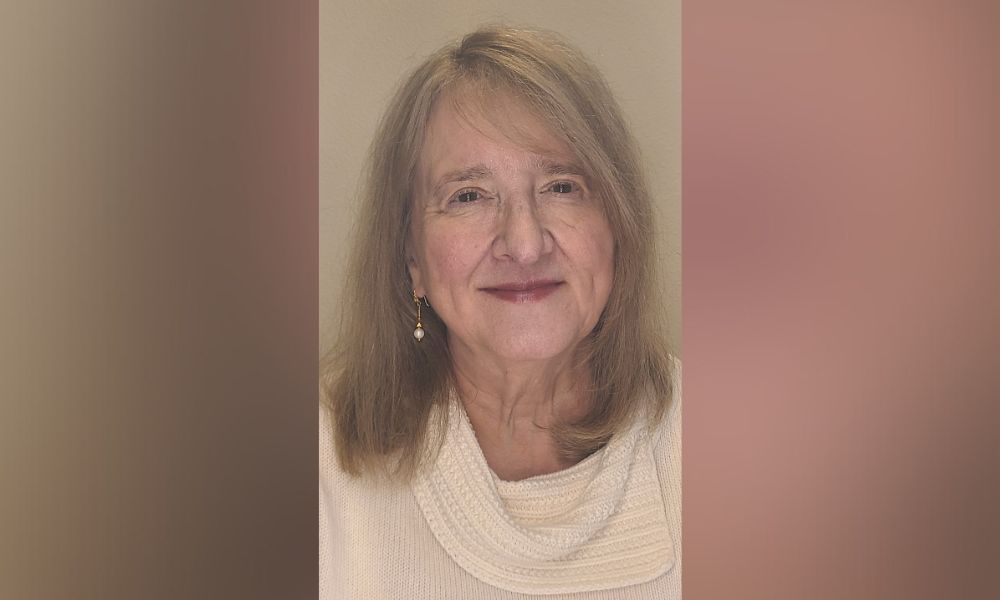
Please share more about your interest in meditation and how you came to this path.
When I was 19, I was in community college, and I took a wonderful class on comparative religions by a man who used to be a Catholic priest. He brought in experts from a lot of different fields, including a Western man who had studied in India and started talking about yoga and the Eastern traditions. It was fascinating, and I observed that tears were pouring down my face.
Fast forward a few more decades, and as part of my doctoral training in clinical psychology, I took a course in Vipassana meditation, which is basically a mindfulness meditation. I found it very enjoyable, but I didn’t keep up with it because I was pregnant, very busy, and meditation took a long time.
Fast forward a couple more years to when I was in my internship, and I had a spontaneous kundalini awakening without having any idea what that was. If you’re sitting quietly minding your own business one day, and suddenly it feels like you got hit in the base of your spine with a bolt of lightning and energy shoots up your body and fountains out the top of your head, that is what a spontaneous kundalini awakening feels like. This was way back in 1992, and people weren’t talking about that stuff. So I suddenly had a very interesting set of experiences to try to make sense of that weren’t covered in my Western studies. I ended up at the bookstore, and I also ended up in the metaphysical community to try to make sense of what had happened.
I had all of these remarkable experiences, but I still didn’t really have a handle on how to live a happy life. So there was a point at which I looked up, and in not a particularly gracious tone of voice said, “Fine, send me a teacher.” A couple of weeks later, I had a little 8.5” by 11” flier of a man who would turn out to be my teacher in my mailbox that said “Meditation with the Master.” I looked at the picture and I thought, Ok, I don’t know you, but you know how to be here and be happy and I don’t, so I’m going to come see you. That improbable way is how I found my teacher, and meditation was part of his practice. I attended many meditation retreats and through that process I came to see the utility of meditation.

What are some of the benefits of meditation?
In the West, meditation is lauded for its health effects and its stress-reducing effects. Studies have been published that show all kinds of benefits, which range from practical and observable things – like lowering your blood pressure, less generalized anxiety, less social anxiety, shorter time to sleep onset, and enhanced quality of sleep – to things as esoteric as increased empathy and improved quality of life.
Those are great things, but they weren’t the original purpose of meditation. The historical purpose of meditation, and traditionally what was very important in the East, was to discipline your mind.
Also, quiet mind is when inspiration comes most easily — whether you want to think of that as the Divine talking to you, or your Higher Self reaching you, or your mind finally being quiet enough that its cleverness can show itself to you. It’s really critically important to make that space inside yourself where inspiration can come.

Can you share more about the two branches of your organization and why they exist?
There is a difference between people who want to “wake up,” or what traditionally has been called enlightenment, and people who just want to feel better. It’s one thing to want to feel your oneness with all that is and your connection with divinity and another to want to lower your blood pressure. That is why my organization has two branches.
We are the Kinder Life Foundation – a federally recognized church – but we teach Integrated Interventions, which is secular, because the techniques work for everybody. You don’t have to believe in the Divine for the techniques to work, and helping shouldn’t be relegated to only the people who believe the way you do or believe anything at all. Pain is pain; everybody hurts. We can’t escape pain, but you don’t have to suffer. Letting people know that they don’t have to suffer has always been really important to me.
If you want community, if you want to meditate and practice in a group with that background of gratitude and spirituality, we are there for that, too. That is what the Kinder Life Community is for. In Sanskrit, the term is satsang- company of the wise.

Can you share more about the free workshops you offer and the techniques they entail?
The KLIIICs we offer free of charge involve two techniques: Nadi Shodhana, or alternate nostril breathing, and our organization’s own Simple Breath Meditation®, which I developed because it’s particularly good for Westerners with really active minds. It combines the best of mindfulness meditation and mantra meditation and gives your mind just enough to chew on so that you can get down into a quiet lane. These two techniques, if you do them every day, really do change everything. You give your nervous system a break and you let yourself know that you can immediately feel better with Nadi Shodhana. A few minutes of Nadi Shodhana balances the right and left hemispheres of the brain, increases our ability to think more clearly, and makes us feel calm. This is just a gift that we wanted to give because we can.
How do you feel about meditation apps?
Can listening to a recorded meditation give you a relaxed frame of mind? It absolutely can. Can it help you de-stress? Yes, it can. Can it teach you how to have a disciplined mind? Not necessarily. One of the primary purposes of meditation has always been to discipline your own mind. In a guided meditation that someone else provides, you’ll be listening to their voice, and part of you is going to expect that, so you’re not going to be 100 percent in the present moment. Meditation is meant to bring you into the present moment so that the mind can genuinely relax and ideally connect with all that is – the Divine, God, whatever you feel comfortable calling that. Achieving that discipline on our own means that we can be quiet, we can access peace no matter where we are, we don’t have to pull out an app, and we’re not dependent on a device.
Can you share more of your thoughts about meditating solo vs. with a group?
When you meditate or do any of the breathing practices in a group, there are greater benefits simply because of the processes that physics calls synchrony and entrainment. It just means that the more people doing the same thing together, the higher the wave form of that activity gets. The more people doing a thing together, the more powerful it becomes.
When you are not feeling so peaceful, joining a group of people who are peaceful automatically starts to entrain you to the stronger wave form. That’s just the practical physics aspects of it. In spiritual terms, there is a great sweetness in being with people who are acting for peace.
When you are meditating, you are not just creating peace for you, you are creating peace for everybody, because we are all swimming in the same pool of vibrations. Again, this is physics; this is unified field theory. The more people doing it together, the bigger the wave.

When can people benefit from having a teacher?
There is a fascinating paper that was just released in April that involved a sample of more than 3,000 people, over 45 percent of whom reported an altered state of consciousness that was not drug-related. That is the kind of thing that happens when you meditate or do breathing or other transformational techniques. While the majority of those respondents found the experience pleasant and transformational, a significant percentage did not; 13 percent – well over 300 people – found it really distressing. They went on in the body of the article to say those highly negative experiences would have been less likely to have happened had the participants had a cultural or spiritual context to understand it.
That is what a teacher is for; that is why you have a program and somebody whom you can talk to before you do things that are going to change your own consciousness.
When you sit down and start to have a quiet mind is exactly when all of the emotions you’ve been running away from pile on. Some of the techniques that we can teach are so simple, safe, and transformative that we knew we could offer them completely safely to everybody and have the expectation of a routinely positive outcome. But if anything happened in their consciousness, if anything opened up in a way they found unpleasant, there was direct access to the teacher of the KLIIIC and to me, so that I knew, for sure, that if anyone was experiencing anything problematic or difficult, we could take care of them.
[Alternately] one of the great joys of existence for those of us who have these glorious transformative experiences is remembering the connection and feelings of consummate love and connectivity to all that is. Most people really do need a teacher for how to ground that amount of energy and joy and still live a human life.
If you’re stuck, that is a time when I would say find yourself a teacher.
What advice do you have for finding a legitimate teacher?
Run away from anyone who calls themselves a healer. Nobody is going to heal you; you are going to heal yourself. There are certainly healing facilitators, but some of the signs that someone is coming from ego is if they are calling themselves a healer, if they need you to attach to them in any way, if they ask for anything from you besides the basic decency and respect you would give another human being, or if they are manipulative in any way.
There are a lot of good techniques out there, and different techniques work better for different people. We all have unique nervous systems and unique histories, and one size doesn’t fit all. Every path Home is unique.
In my experience, you will know your Teacher when you meet him or her. You’re going to hear somebody’s voice, or you’re going to see somebody, or there is going to be a particular piece of knowledge that’s going to hook your attention. Pay attention to that, but then also use your intelligence. If they are charging for their services, are they charging a reasonable amount? Are you having an experience where you can feel a change in you? Do you feel happier and calmer and more hopeful?
Any final thoughts?
Looking for the Divine or your Self in the West is a little more challenging, exciting, dangerous, and chaotic than it used to be. I have seen so many genuinely well-intentioned people who want to wake up, who want to not be trapped anymore by the anxiety and the fraught-ness of what human life can be, who have tried this thing and that thing, and they’ve listened to that meditation and gone to that retreat, and they’ve made some progress but they are still not happy.
Don’t give up. If you are feeling that longing for more, and for Home, it’s because it’s time, and you’re ready, and I promise you that the help you are looking for is out there.

 Compassionate Coexistence
Leave a comment