
Once upon a reality, a nameless white hen was packed into a truck alongside countless other frightened birds and sent to a slaughterhouse.
Then, the unexpected happened. She fell off the truck and lay, unnoticed, on the side of a highway in North Carolina until a caring passerby noticed something amiss and pulled over.
The tiny, bedraggled bird was in bad shape. She couldn’t lift her head. She couldn’t open her eyes. But she had two major things going for her: She wanted to live, and she ended up at the Piedmont Farm Animal Refuge in Pittsboro, North Carolina.
The Refuge’s founder Lenore Braford and her partner Paul Drake immediately started emergency care — medicine, tube-feeding, and fluids – since the tiny girl was too weak and injured to sustain herself.
They also gave her a name: Hope. The hen lived up to that name, survived, and remains a lifelong resident of the sanctuary, where she’s gained the ability to live a meaningful and peaceful life for the first time.
“This is what happens to a lot of these animals in sanctuary,” Braford said over Zoom in June. “An accident or a tragedy happens that is actually the best thing to happen to them.”

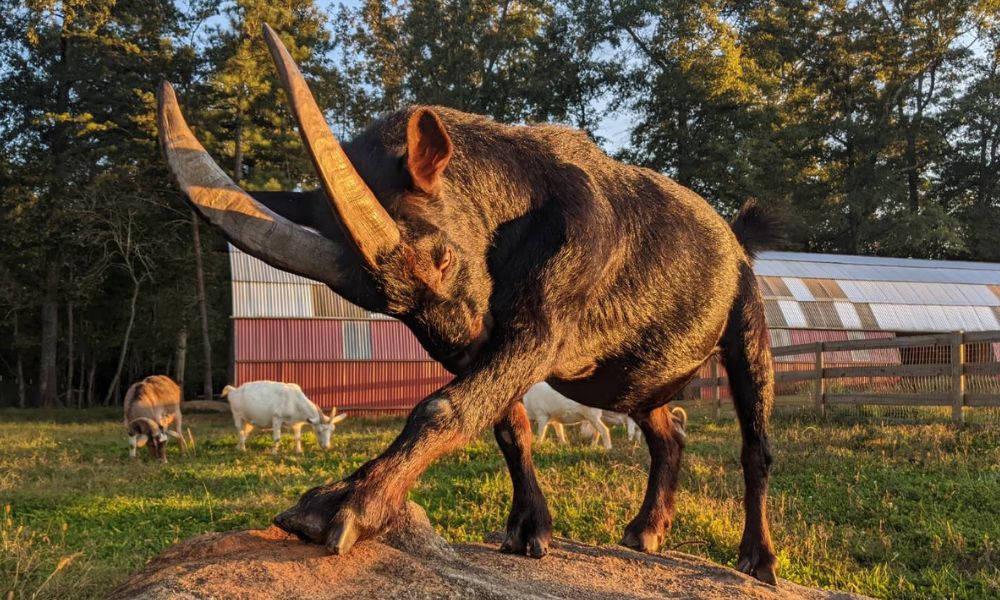
The Refuge is home to more than 100 chickens, turkey, ducks, geese, sheep, cows, and goats who were rescued from abuse, neglect, and abandonment. The Refuge is also working to expand residency in the near future to pigs – more than 8 million of whom are typically killed and processed for food at pork plants, including the industrial animal agriculture giant Smithfield a mere 2 hours away from the Refuge.
While many people are increasingly becoming aware of the horrors animals endure in factory farms, many of the Refuge’s residents also come from tragic conditions in smaller-scale facilities that are often deemed “harmless” or “idyllic” by modern society — including backyard, DIY operations or local, organic farms.
The Refuge’s first rescue, Robby, had been purchased by a local co-op as a “hen” but soon showed his true colors and crows – leading to a community divide in which some members wanted to kill him and others wanted to find him a home. Thankfully, the Refuge rescued him in 2014 and gave him a happy life until his passing in 2021.

Laurel, a gorgeous speckled hen, also arrived at the Refuge from a backyard egg farm, where she was deemed “worthless” after a few years when her egg production naturally waned. A person who saw the Craigslist ad – “Free hens, will be shot tomorrow” – scooped her up and re-routed her to the Refuge, where she’s lived ever since.
While providing lifelong care to each resident is a cornerstone of the Refuge’s mission, the sanctuary stands out for another innovative way that they put their animals first – via animal-centered design.
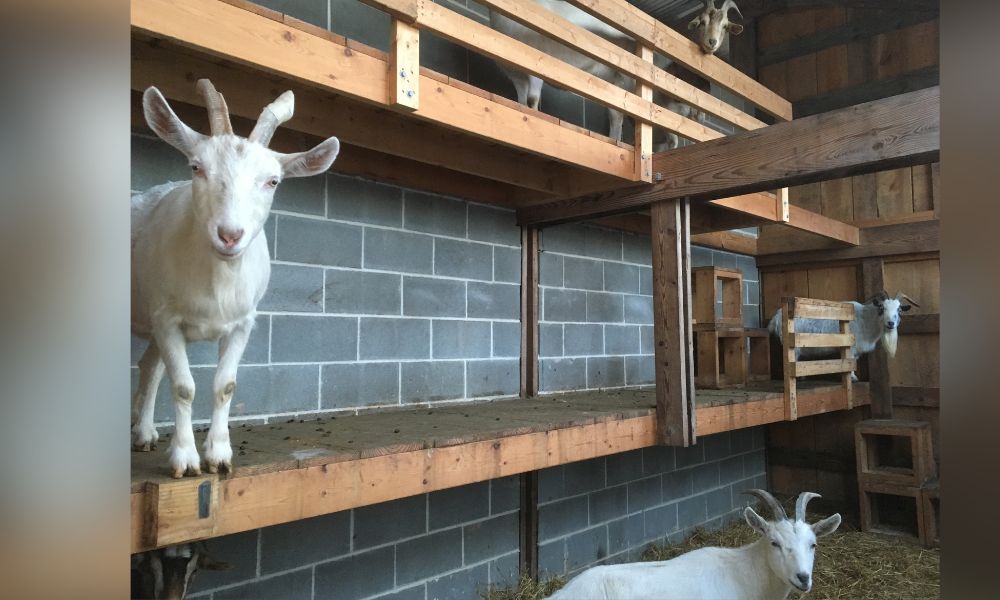
Drake, who has a master’s degree in architecture from North Carolina State University, got his professors to sign off on a thesis that focused on building for a unique set of clients – the Refuge’s goats. Then, much as he would have for his former human clients, he spent time with the goats, observing their behaviors and expressed desires in order to design with their satisfaction and safety maximally in mind.
So started a passion that now forms the foundation of the sanctuary’s habitats and enclosures. In the goats’ case, Drake noticed they liked high spaces and overseeing from above – which resulted in a 3-story goat house that allows the animals maximal climbing and bunking for elevated sleep.
Regarding chickens like Laurel and Hope, Braford and Drake learned that they descended historically from forest-dwelling red jungle fowl of Southeast Asia and that the birds – contrary to most U.S. portrayals of them in tiny pens or open pasture – preferred a mixed-vegetation habitat where they could forage and hide from aerial and other predators. The Refuge’s chicken house now provides that cover, as well as an innovative winged design that folds down to safely house the chickens at night.
For Drake and Braford, the extra work to provide their rescues with this level of care – for which they received the 2023 Outstanding Sanctuary Award from the Global Federation of Animal Sanctuaries (GFAS) – is no less than the animals deserve, although they acknowledge it’s sadly not the norm.
“A lot of times people will imagine this wonderful, peaceful existence for these animals that’s not even on the small farms and really that’s fairly far from reality,” Braford said. “The bottom line is that if an animal is being used for a product, that is an exploitative relationship. As soon as the profit is going down, then the animal’s best interests are not going to be taken into account, whether that’s giving them medical care or keeping them healthy and alive past their point of ‘production.’ And that’s something we try to talk about a lot here at the Refuge.”
Their work with the animals – and the magical connections and lifestyle changes they’ve seen the animals inspire in their visitors – helps them hang on to hope when life gets tough.
“We may be overwhelmed by a lot of the injustices and the social justice problems that are in our world,” Braford said. “But with this issue, you can have an immediate impact by learning about the animals and changing your habits and what you are supporting with your dollars. That is an important part of what we are doing here at the Refuge in encouraging people and educating people to see these animals as individuals.”
Braford and Drake chatted with Compassionate Coexistence about the sanctuary’s start, why animal-centered design changes lives for both animals and the people who care for and visit them, their decisions to go vegan, and the realities that their residents would have faced in animal agriculture had they not been rescued.
The following Q&A has been edited for length and style. To check out the full conversation, listen to Episode 10 of the Compassionate Coexistence Podcast here!
To learn more or support Piedmont Farm Animal Refuge and their life-saving work for animals, check out their website here or join their Patreon community here. Learn more about their upcoming documentary here. You can also follow along with their residents’ journeys on Facebook, Instagram, YouTube and X.
A Q& A with Lenore Braford (LB) and Paul Drake (PD) of Piedmont Farm Animal Refuge

Tell us more about the Refuge’s mission and advocacy approach.
LB: Our mission is to rescue farmed animals from abuse, neglect, and abandonment, to educate people about the animal farming industry, and to promote the idea of veganism and vegan living through different activities and programs – whether that’s through free community potlucks to expose people to a community of people and delicious food, cooking classes, or giving out free samples. As an organization, we strive to be a very welcoming place for everybody. We don’t have a policy where you have to be vegan to come here or to volunteer, and we also try to encourage people to be curious and ask questions. We always say there are no stupid questions, because a lot of what we learn about these animals is just wrong and we want people to discover, be curious, and learn more.
Where do the rescued animals at Piedmont come from?
LB: They come from all sorts of situations. A lot of our sheep residents came from a butchery that was shut down by law enforcement due to extreme neglect. Some of our goats are from similar situations. Some are just homeless or abandoned at shelters. It’s becoming more popular for people to buy farmed animals like pygmy goats and put them in an urban backyard when they don’t really have the proper facilities or setup, so there are a lot of individual people getting animals and then realizing they are not equipped to take care of them and then dumping them into county shelters or releasing them out into the wild. A lot of our ducks come from those types of situations where they were somebody’s beloved pet and were then left out on a pond with wild ducks to die, since they obviously can’t survive due to their domestication. We also have a number of ducks from school hatching projects; thankfully, we’ve had some really good conversations with teachers who have moved away from these models because they are now realizing the baby ducks’ fates when the projects are over is not good. We also have a bunch of chickens who came from a giant industrial warehouse that was hit by a tornado.
Can you give an example of Animal-Centered Design at the refuge?
PD: When we built our chicken house in 2014, it was originally mostly pasture and a little bit of woods. We had always seen these pictures of chickens out in green pastures pecking around in the grass, but we learned this is not what their instincts are. They are descendants of the red jungle fowl in Asia, and they want to be under cover or digging away mulch and finding birds in a forested, lush environment. So we’ve allowed a lot of plants that came up naturally to grow, and we also planted a bunch. It’s become so much more like the environment that they want, and we’ve seen such a difference in their behavior, especially in the summertime, when it gets hot. They used to all just huddle inside their house; now they are always out, and they get a sense of safety from predators, especially aerial predators, being in the cover of the bushes and trees.

How do you ensure that the Refuge is a true sanctuary for animals?
LB: A really important part of what we do is give the animals choices and as much of a sense of agency as possible. One of the challenges with a sanctuary is there is always a balance between freedom and safety. All of the species we take care of have been domesticated and cannot just be released and go out and live in nature; there is a certain amount of care that they need and require. So the question is how do you provide them with as much of a naturalistic environment but also have it be a safe place where they are not going to get into trouble or get hurt.
How did you take the idea of starting an animal sanctuary and make it into a reality?
LB: One of the most important things that set me up to do well with the Refuge is that I did a lot of internships and had experience at other animal sanctuaries. After doing this work for a number of years as a volunteer, an intern, or on staff, you really find out if this is something you are cut out for physically and emotionally. That hands-on experience is absolutely valuable.
It was originally by chance that we ended up in North Carolina for other life reasons. But animal sanctuary work is so vital here because of the level of both industrial and small-scale agriculture. It took us almost a year to find the right piece of property. That involved a lot of persistence because we wanted a mix between pasture and woods to accommodate the needs of our animals, and we didn’t want to clear cut a forest to create open space and disturb nature to a huge degree.
One of the things we had to do for the county to accept us was to invite all of the adjacent property owners to a meeting to let them know what we were doing so they could go to the county and complain if they didn’t want this to happen in their backyard. Thankfully, we didn’t get too much pushback. One of our neighbors was really concerned about whether we were going to have peacocks, because they were really worried about peacocks landing on their front porch; another neighbor was worried about what was going to happen when the animals died, because he didn’t want them laying around in a field and contaminating his well. So these were easy things to clear up with our neighbors. For the most part, people have been kind and interested and supportive of what we are doing.
Any advice or insight for people who may want to start a sanctuary?
PD: A really important thing when you are thinking of starting a sanctuary is to make sure it’s an approved use of the land by your county. Lenore went through that whole process with the county of getting this place approved. The last thing you want is for them to come in one day and say, “Oh, you are not allowed to do that here.” We have heard of that happening.
LB: One really crucial point is thinking about the long-term sustainability and how many animals you can realistically take in. We, and all sanctuaries, are contacted on a daily basis about animals in need, and we want to rescue all of them. But of course we couldn’t do that and exist for very long or have the animals under our care have a wonderful quality of life. So that’s a constant difficulty. A lot of my thinking has been wanting to make sure that when we are taking an animal in, we are making a promise to them that we are going to care for them for their whole life. By the way, that can be for up to 40 years if you are a goose, 25 if you are a cow, so it’s a serious commitment, and I take that very seriously. I don’t ever want to be in a situation where we are forced to close down because of funding or too many animals or all the different reasons that sanctuaries close.
There are a lot of people I talk to over the years who want to start a sanctuary, and I always tell them, “Experience, experience, experience is the No. 1 thing you can do,” because you are not only learning about running a nonprofit and running an animal sanctuary, but you are also learning about yourself.
What inspired you to go vegan?
LB: When I was a kid, I loved animals, but I didn’t really know what happened to animals in the food system. It was in college, when I was studying environmental studies, that I learned about factory farming for the first time. I was shocked to learn about the amount of suffering that so many animals are living every day that’s hidden from us. Initially, I became vegetarian just from being exposed to the idea of factory farming. But then I took an environmental philosophy course, and I was randomly assigned to debate that it was ethical to eat animals and their products. I started to learn more about the suffering in the egg and dairy industries and that eventually all those animals are killed anyway. So trying to come up with moral reasons that it would be ok to support those things was a real opportunity for me to look inward. I always say I lost the debate, but the animals won, because I convinced myself to be vegan at the end of that.
PD: I went vegetarian in college, thanks a lot to Lenore’s influence. After college, we went overseas in New Zealand and Australia while doing a program where we would stay a week on different kinds of farms. One of them was an organic dairy farm in New Zealand. It was in the most beautiful location – rolling hills of green everywhere. I was under the impression that organic milk came from “happy” cows, so we were there to test this idea. What we learned really blew my mind. I did not know that cows have to be impregnated every six months with artificial insemination in order to have milk constantly, or that the male calves were killed pretty soon after they were born. The other babies who weren’t killed were separated from their mothers, and they didn’t get the milk from their mother; they got the mastitis milk, which is the infected milk that the farmers couldn’t sell. All of that was enough to convince me to go vegan.
What are some of the other surprising realities about animal agriculture that you’ve discovered?
LB: The concept that “Cows make milk, chickens make eggs” is something that you grow up learning, and you don’t really think about the history of how we got to this place with these animals. Some of the first chickens we took in were from an industrial egg facility, but over the years we’ve taken in many individuals from small, local, organic egg farms. We have a chicken right now named Laurel who was part of one of these so-called “humane” facilities. After a few years of people feeding them and taking their eggs, the hens’ egg production naturally starts to go down, and the chickens were deemed “unvaluable.” So they just stopped feeding them, because they did not want to put the money into that. By the time the neighbors figured out what was happening, the birds had been consuming feathers from their own bodies and from the bodies of other birds because there was nothing else to eat. Luckily, the neighbor was able to get them to safety, and we took in a large number of them. It was really sad to see no tails and all these naked areas on their bodies because they were essentially starving.

What’s your ‘why’ for doing this difficult but important work?
PD: We’re taught implicitly through our culture that some animals are more important and more worthy than other animals. When people come out to the Refuge and get a chance to meet a goat or a cow who is in a loving environment where they are valued, it’s a real eye opener for people.
LB: We live in a world where farmed animals are viewed as commodities – as things. But they are not. There are very few safe places in the world for these animals where they are relaxed enough to actually be themselves and do things like trust humans enough to flop over for a belly rub. It is simply the right thing for us to do to help people be exposed to that and see these animals for who they are and to realize that they are not that different from cats and dogs who are viewed as parts of the family.
We have many people who come here who have never met a turkey or a sheep in person, and then they get to meet Blackberry (the turkey), and he’s climbing into their lap or giving out his hugs or being his wonderful self. It’s not only a safe place for the animals to live, but it’s also a place where people can meet these individuals and see them in a location where they are themselves, they are happy, and they are free.
If you’ve never met somebody who is different from you, and you don’t have any kind of personal connection or relationship to them, then it is really hard to care. Another part of our mission, with our tours and other public programs and even our volunteering, is getting people connected to these animals on a one-on-one basis and so ultimately helping more of them in the long run. A majority of farmed animals are living in terrible conditions, and how they are living affects how we value them and how we see them – so to see what is possible at the Refuge, to see a model of what the future could be for these animals, to be able to envision it is really important. It gives people a different framework for how they start to see and value these animals.
How do you two cope with the emotional toll that comes with sanctuary work?
LB: It is very important to take care of yourself and be compassionate toward yourself to avoid things like burnout and compassion fatigue. Having a life outside of this work is very important. For us, because we live at the sanctuary, sometimes we physically need to leave and take a vacation. That was hard in the early years because we didn’t have a big staff. Now it is more possible. It’s important to remember that even though the animals need us every day and there is so much suffering out there, if you want to be in this movement for the long haul, you do have to take breaks and take care of yourself and do other things outside of the animal rights movement.
PD: It’s especially hard with animals that are bred in such a way that they tend to live very short lives, especially the chickens who come from factory farm situations. Having more people join the animal care team who can have eyes on all the animals and come to decisions as a group has helped, although it’s still tough when these animals pass away suddenly. It’s something that a lot of sanctuary founders and animal caregivers have to deal with, and it’s good to have a community.
LB: We have a memorial area as well, which is important for that community, where we have a yearly ceremony. We gather and remember the animals who we have lost over the year, and then we will hang a medallion for them so that we are honoring them even after their death and we know that they are not forgotten. That’s symbolically important for me and for a lot of the people here at the refuge.
Final thoughts?
LB: One of the biggest ways you can help us and other sanctuaries is by supporting, whether that’s through donating or volunteering your time or sharing the work with other people in your circles.
PD: For anybody wanting to start a sanctuary or wanting to learn more about sanctuaries, the Open Sanctuary website is a super nice resource that didn’t used to be there, and we are all so lucky that it is there. They’ve got hundreds of articles on good, best practices on sanctuaries and how to get started, and we’ve helped them on a few resources too.
 Compassionate Coexistence
Leave a comment