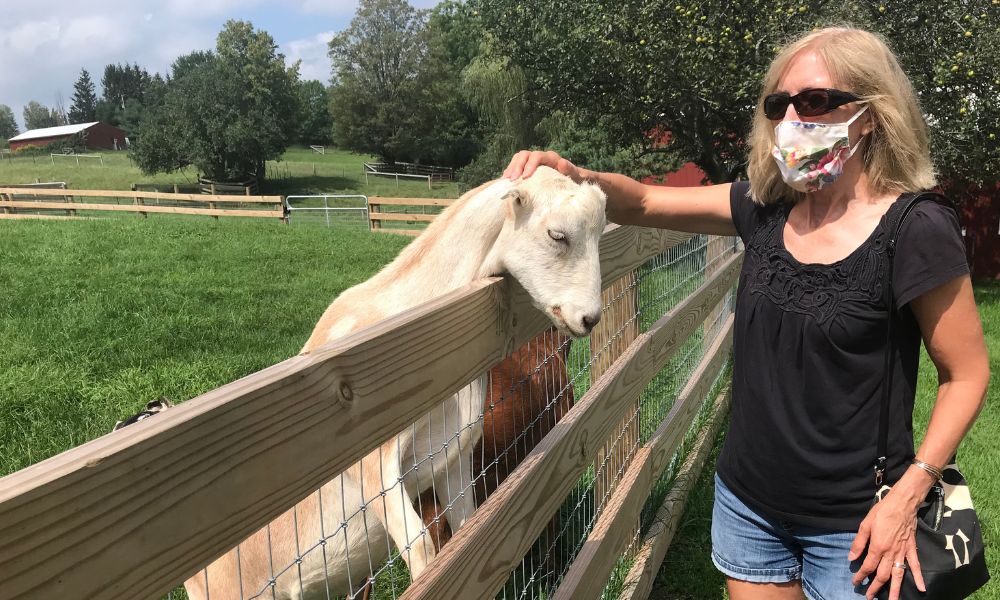
To empower others to work through their pain, prevent unnecessary suffering, and align her everyday choices with her highest values — those were some of the driving forces that first led Angela Crawford to a career as a psychotherapist and then to a still unfolding path as a vegan author, speaker, and transformational coach.
Crawford, whose blue eyes sparkled with vitality and purpose visible even through a sometimes shaky Zoom connection when I caught up with her in May, said she obtained her doctorate in clinical psychology because she wanted to ease the agony she saw around her.
For 25 years, that path spanned unique settings in upstate New York where Crawford really felt she was helping people help themselves – from working with people crippled by chronic pain to injured workers and others struggling with stress, anxiety, and trauma.
But the Universe had other plans in store for her and planted a seed in 2006 via a PBS special on workers harmed in animal agriculture settings. Although the broadcast spared viewers the grisly details of the fates of farmed animals, Crawford made the connection.
“I remember thinking, ‘Well, if I don’t like how the people are treated, how do I think the animals are being treated?’” she recalled. “I started to think about how my food got to me. The system struck me as really unjust.”
Crawford described herself, prior to that moment, as someone who “ate comfort foods, microwave meals, sweets, and processed foods,” who didn’t like fruits or vegetables, and who thought she “needed” meat and dairy to survive.
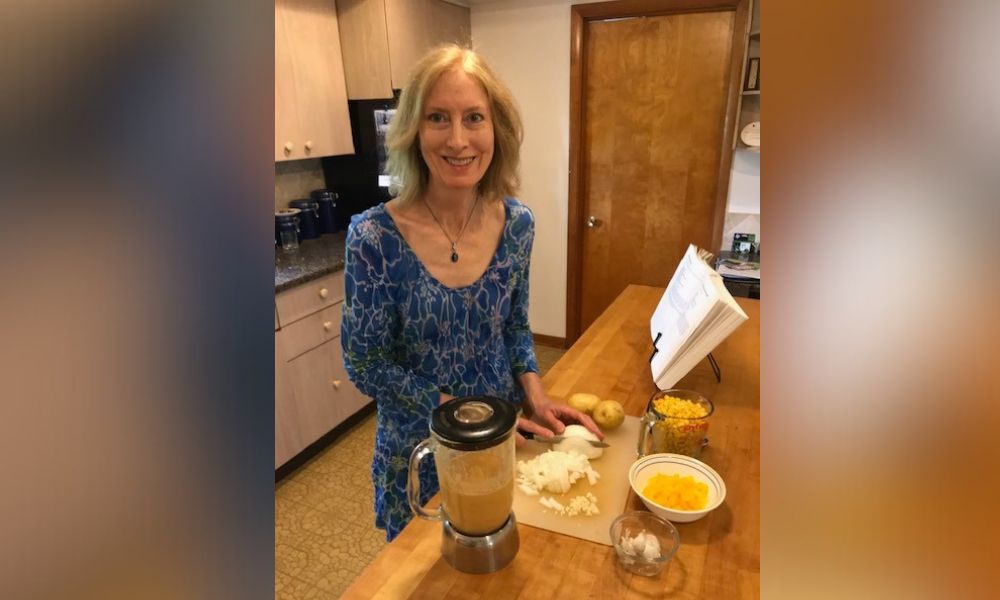
But the next day, she went out and bought a vegetarian cookbook and some unprecedented pots and pans, then she crafted a plant-based lasagna bursting with color, flavor, and vegetables.
Unbeknownst to her at the time, a seismic internal shift was already happening.
She learned that others also enjoyed her plant-based cooking and that the joy and adventure she felt in exploring new ingredients and dishes far outweighed any former sense of inconvenience.
She also learned more about the cruel realities for animals that fuel the dairy and egg industries and – over time – decided it was time to align her lifestyle with her highest values of compassion for all sentient beings.
She shifted to being vegan. Then she followed her spirit a step further by training to become an approachable and effective vegan advocate and life coach – picking up certifications in plant-based nutrition from e-Cornell’s T. Colin Campbell Institute and as a Master Vegan Lifestyle Coach and Educator through the Main Street Vegan Academy. She also became a Transformational Coach through the Institute for Women-Centered Coaching.
Crawford recently redirected the hard-earned skills she’d acquired as a psychotherapist to a new career helping other plant-based or vegan-curious people navigate their own voyages to veganism, as well as working with street level animal activists trying to cope with the emotional trauma that exposure to the massive scope of animal suffering can cause.
It’s a choice she doesn’t regret.
“I wake with a deep sense of purpose each day,” she wrote in a blog about five ways going vegan helped her. “Through my daily food choices and my efforts to educate and raise awareness, I can be part of the solution for many causes that matter deeply to me: caring for animals and the planet, food insecurity, justice, and human health.”
As her clients shared their stories and struggles, she became curious about the mind-body-spirit transformation of choosing a vegan lifestyle. To that end, she spent several years conducting original research, ultimately surveying more than 370 vegans and interviewing dozens in-depth about their experiences.
Her findings will be revealed in a book to be published by Lantern Publishing, likely in 2025. But as a sneak peak, they include core results of vegans overwhelmingly feeling a deeper sense of purpose in helping create a kinder world, greater emotional fulfillment and well-being, and a deepening sense of interconnectedness with all life.
“There is a link between what we eat and our emotional wellbeing,” Crawford wrote on her website regarding her research. “There are studies that show eating more plants makes us feel better emotionally and have less depression and other mental health struggles. Part of what I’m hoping to look at with my research is this idea that living aligned with our values brings peace, meaning, and connection with like-minded people.”
The following Q&A has been edited for length. To listen to the full interview, check out Episode 8 on the Compassionate Coexistence podcast here.
To learn more about Crawford and to sign up for her newsletter and book updates, check out her website at angelacrawfordphd.com. You can also follow along with her original interviews on her YouTube channel, The Vegan Transformation, here.
A Q&A with Vegan Author, Coach, and Speaker Angela Crawford

Tell us more about your journey into veganism.
It was 17 years ago, in 2006, that I happened to see a program on PBS that made me think about what I ate in a new way. What I remember is that they showed that these workers, many of whom were immigrants, were doing really dangerous and repetitive work that led to lots of injuries. Many of these people didn’t feel like they had a lot of other economic choices, and they were pressured not to report their injuries, not to get treatment, and to just keep working.
That show just led to an immediate shift. Then once I saw and read more about what happened to animals [in animal agriculture], I couldn’t eat them anymore. I saw a pig or a cow the way I would see a dog or a cat; I had made that connection that had been blocked before.
I kind of knew that the dairy and egg industries were cruel, but I didn’t immediately act on that. I started by going vegetarian. But as I continued reading, I learned about the health benefits [of plant-based eating], and while that wasn’t the driving force for me, sharing that knowledge is actually part of how I help others. I do think there is a rising health epidemic in our country, both with physical and mental/emotional health. Some of that is very strongly related to our lifestyles, and how we eat is a huge part of that. Eating more plants helps our brains and bodies, and eating more inflammatory foods like meat, dairy, eggs, and highly processed foods can lead to a lot of people suffering.
Over time, I decided it was time for me to become vegan. I had done some personal work to where I was ready to honor my truth, even if it was inconvenient. When I had a strong enough reason “why” to make the change, I became determined to figure out the “how.”
You’ve written that going vegan made you feel more alive – please say more?
Going vegan did become an adventure because I found that the colors, the flavors, and exploring healthy ingredients I had never used before awoke a creative part of me that I hadn’t known was there.
Life opened up after becoming vegan. I saw so many things in my life going better. Even though there was pain in knowing about the animals, it also felt good to know I was at least doing something to not contribute to that system anymore. I personally found that I made connections – how I am connected to animals, the planet, and others – that were meaningful to me, and my food horizons opened up. There was just nothing about it that was depriving me.
Can you share more about your research into the mind-body-spirit connection of going vegan?
I ended up doing a survey that reached 350 vegans, and then of those I interviewed in- depth about 75 of them. It turned out there were seven core benefits that people experienced.
What everybody said over and over was along the lines of, “I feel at peace because I’m finally aligning with my values; I am finally living by the values of nonviolence, ahimsa, compassion, and not causing harm or causing the least harm.” That alignment with values came out in 80 some percent of people. Some said things along the lines of, “I felt a weight lifted that I hadn’t even known was there,” or “I hadn’t realized I wasn’t living aligned with my values until I made the shift and then realized there was so much peace now that I am living the way I believe, which is to not harm sentient beings.”
In some cases, a benefit was alignment with health: “I’m putting things in my body that actually nourish it rather than harm it,” or “I’m eating more lightly or sustainably on the planet.” Many people had reversed disease and overcome illness; it was wonderful that they had healed, but the change also gave them back life and empowered them.
So many of the people I interviewed had found a sense of purpose through becoming vegan. I heard many stories of people who had changed their lives and then wanted to help others through their own transformation. Many of them had businesses or volunteered or shared this [way of life] with others in ways that were amazing.
Authentic fulfillment was another of the values. It wasn’t about just being happy all the time; it was this deeper fulfillment that you can have these difficult emotions at times, but you’re living a more whole existence that allows those to be part of it. Then there was connecting with like-minded people, and some people found that deeply fulfilling.
And last of all there was a sense of increased spirituality and interconnectedness. A large percentage of people said, “I now feel connected with nature or see that I am connected with all of life.” There was a sense of unity that maybe before had been cut off, because if we are not acknowledging what happens to animals, we can’t fully look at certain things, and we really have to block off a certain awareness.
What struggles have you seen come up for people when they commit to a vegan lifestyle, and how do you help clients navigate those challenges?
I would break challenges down into practical, emotional, and social challenges. The practical ones may be, “How do I replace favorite foods with foods I would like just as much?” and “How do I do plant-based cooking?” There are so many resources out there that can help people navigate these practical challenges, and as soon as we have a strong enough motivation to change, then what we need is out there when we are ready to look for it.
The social and emotional aspects are sometimes harder. We are wired to be social creatures; we want to fit in, and we want to have connections with loved ones. So it can be challenging for some people when suddenly we are changing what we eat in a way that is different from how our family or friends are eating. But you can have a different lifestyle from someone whom you love and still stay connected. Maybe there are new traditions you need to create or ways you can enjoy holidays, where as a vegan you don’t have to be around meat if you don’t want to. Maybe you come back together for a vegan dessert later on, or you spend the holiday with other vegans. Or maybe you choose to bring all kinds of plant-based dishes that can be shared with everyone. You find what you can tolerate, what works for you, and how you can still stay connected and honor the true meaning behind traditions without having to compromise your values.
Emotionally, as we learn about what happens to the animals and how horrific that is, it’s certainly easy to get some degree of trauma. We need to be aware that trauma has an impact on our brain, and if we don’t recognize how we have been affected and take care of ourselves, we are not going to be as effective in our outreach, activism, or advocacy. We have to include ourselves in our circle of care.
One of the people I interviewed had been an advocate for 45 years, and later in life, after suffering from post traumatic stress and other challenges, she got sick from the stress on her body from what she had witnessed without taking care of herself. She came to realize, “I have to do things I love too. I have to balance out my passion for helping animals with doing things that replenish me.” She also came to realize that maybe she couldn’t watch as many videos or see as many social media posts as she had once thought she needed to.
When you have decided you are all in for a plant-based or vegan lifestyle, holding your “why” close to you will help you figure out how you are going to handle these social situations. For me, it was realizing a lot of different things – including that what I wanted and needed mattered and my values mattered, so it was okay if it led to a little disruption socially. I didn’t always feel that, but it was coming to terms with what my purpose here was. And my purpose was that I wanted to honor my own values, and I wanted to role model a healthier and more compassionate way of living through what I ate.
You’ve written that “compassion” translates to “suffering together.” Is it possible to be compassionate and not burn out?
It is an act of compassion to be willing to learn what happens to animals, but learning how to hold that compassion in a way that doesn’t bring you down, that includes self compassion, is important. Especially if we are empathic people, witnessing cruelty does become overwhelming. Compassion is healthy for us, but we do sometimes have to learn how to hold that in a balanced way so that we are not so caught up with what is going on out there that we are not holding some awareness of what’s going on inside of us.
Can you speak more to the importance of self-care in this movement?
When we are coming from a standpoint of feeling traumatized by what we have seen, we tend to see everybody as either heroes, victims, or perpetrators. We see other people who are meat eaters as perpetrators, forgetting that we ourselves were too [at one point] and that this is what some 90 percent of the world does. We start to see things in a distorted way that makes it difficult to communicate and that doesn’t invite people in to join us. It’s easy when we are feeling so angry and sad to come from a place that would actually distance people, and not to see us as having common ground.
Self care is about recognizing your limits without getting overwhelmed and having safe ways to process feelings – anger, sadness, grief. You may have a safe friend or a therapist with whom you can talk it through, or techniques like mindfulness and meditation, exercise and eating healthy plant foods that actually help your brain and nervous system. All of that helps so that you can be in a good place.
It’s not easy, but it’s about caring enough about what you want in the end to find the resources. There are vegan therapists out there; whatever it is you need, there are groups and supports out there. You must know that you are worth caring for so that you can be part of the solution.
What’s your hope for the future?
My vision is, if not for a vegan world, then certainly a compassionate world that reflects the values of veganism – which is kindness to all sentient beings, including people and animals and the planet as a whole.
Featured image courtesy of Angela Crawford.
 Compassionate Coexistence
Leave a comment