You can listen to the interview on Spotify here!
When two teenagers set out to climb a mountain as a jaunt, little did one know that the ordeals they’d face would catapult him into a lifelong love of learning — and teaching — wilderness skills.
Jason Knight, now the founder of Alderleaf Wilderness College in Monroe, Washington, said of that day decades ago that he and his friend thought the climb would be “awesome.” But they misread the topo maps. They didn’t account for hail, low visibility, or the friend twisting his ankle at the mountain’s summit.
They survived. But Knight said he felt like he was responsible for the “near miss” and that the trip was a large part of the inspiration that led him to seek out wilderness survival resources.
Fast forward through a bachelor’s degree in wildlife Ecology and environmental education from Evergreen State College, many travels, many landscapes, and many teachers, to Knight as he is today — an amiable husband, father, author, and teacher with a spark of perpetual curiosity and excitement in his blue eyes, a firm handshake, and a clear love of the land.
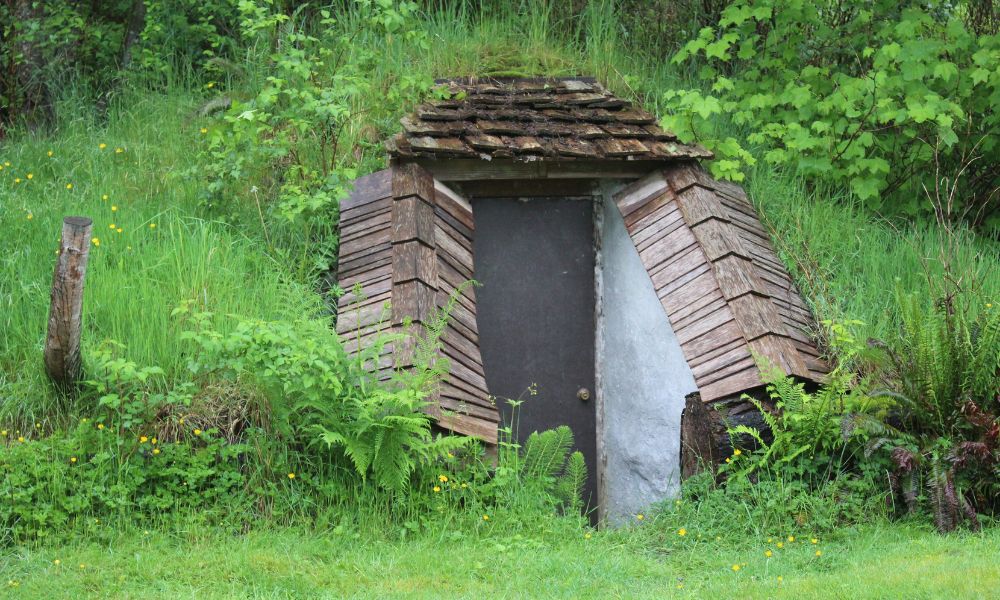
Fast forward the property that is Alderleaf from a swathe of lawns and swampy ground to a thriving campus with gardens, a food forest, a trail system through the surrounding woods, a cob oven and root cellar and outdoor classroom that hosts annual courses in permaculture, wilderness skills, wild and edible plants, and sustainable living techniques.
Both transformations have taken time and focused effort. But for Knight, being able to live at Alderleaf — and teach others the skills that so empower him — has been rewarding.
“It’s hard to put into words,” Knight said over a Zoom interview in June 2022. “There’s so much that I appreciate about being able to be in a place like this. There’s so much wildlife here, and so much abundance. I’m super proud of the fact that we’ve been experimenting with all of these ways to lower your ecological footprint, whether that’s the solar panels on the barn roof or the free refrigeration with the root cellar, or the food that we supplement our diet with from the garden or from the forest. All that’s just incredibly enriching.”
Whether it’s survival skills for natural disaster preparedness or wild medicinal plants for basic home health, Knight said that wilderness wisdom can provide solutions for many modern environmental challenges.
The Q&A below combines a sit-down interview and a chat while touring Alderleaf’s campus. Answers have been edited for length and style.
To learn more about Alderleaf Wilderness College, check out their website here. You can also order Jason’s book, The Essentials of Wilderness Survival, here.
A Q&A with Jason Knight, Founder of Alderleaf Wilderness College

When did your connection to nature start?
I grew up on the East Coast in Rockport, Massachusetts. There’s not a lot of wilderness left in New England, compared to out West here, but I always seemed to like the outdoors. My parents would put me in a backpack and take me on a hike, or when I was big enough to walk, I had a neighbor who would take me blueberry picking and an uncle who would take me out in the woods. I also was in Scouts.
Can you share a story from early on in your journey, before you had refined your wilderness skills?
In high school, I had a friend who was into fitness, and he asked me to pick a mountain to hike. We had expectations that we were going to have this awesome day. It was a beautiful summer day when we got started early in the morning, but halfway up the mountain the winds started to come in. We hadn’t read the topo maps really well; it was super steep, and we probably should have had ropes. Then this hail comes in, and when we finally got up to the top, it was super low visibility. We couldn’t see where to go, and we couldn’t go back the way we came because it was too wet and steep. Then my buddy twisted his ankle up there.
Luckily there were other trails that went down that looked less steep, but because of the low visibility and my friend’s mobility, we got soaked to the bone, we got super chilled, we weren’t prepared, and we felt colder than we’d ever felt before. It was one of those times when your teeth are chattering, you’re shivering, you’re not sure how long you’re going to last. It took us hours, way longer than expected, but we finally found the route down. It was probably close to midnight by the time we got back to our cars.
That trip was definitely a near miss for us, and I felt responsible because I was the one who should know this stuff. So that was part of the inspiration that led me to seeking out wilderness survival resources.
So where did you go from there — how did you start learning these skills?
I was in a coffee shop, and there was a corkboard and a little piece of paper about a wilderness survival skills club that was meeting once a month. I got in touch with the fella who was coordinating that and showed up to the next one, and that was when I started to learn all these survival skills that are based on natural materials instead of gear — like how you build a shelter out of sticks and leaves, how you make a friction fire from dead branches, or the wild edible plants you can eat.
I hadn’t been exposed to much before and realized there was this whole other way of approaching a survival situation by knowing about nature and being connected to nature.
It was completely mind blowing, and I just fell in love with it. I told my folks that I didn’t want to go to college right away; I wanted to immerse myself in these wilderness skills. I was traveling all over the country, taking classes, learning things, going on trips to the wilderness, and practicing survival skills. I started working with one of my teachers as an assistant, and I found a way to integrate my love of wilderness skills with a college degree through Evergreen State College in Washington.
Can you share more about the start of Alderleaf, and how it’s grown and changed over the years?
This property was perfect for us, because it had space, but this was all just lawns and a little swampy area. We made the main gardens, we put in all the fruit and nut trees, and we built the outdoor classroom, the root cellar, the cob oven, the ponds, and the meadow. We built the trail network out here and the primitive camp. We hired a permaculture expert, and we put together a master permaculture plan that we started to implement.
It seems like a lot, and it has been a lot, but it was a little bit at a time. It’s been doing little bits, over the last 14 years.
I created the first program in 1999. The first year, we had a small class and we put out notices on permaculture sites for people excited about permaculture and the outdoors who might want to live in a place where they could do this stuff all the time. We rented out rooms, like dorm rooms.
As our programs grew, we needed more living space for students. Then my wife and I had our daughter Kaia, who is 11 now. My wife was the office manager and the land steward, and she couldn’t do all that remotely when we lived like six miles away, closer to town. Over that summer, we moved up onsite. At one point we had three cohorts of 20 students full-time, year round, across two different locations, and we were running classes six days a week with 10 full-time staff working out of this building.
We love the teaching part, but managing the properties was not as big a passion or a strength of ours, so just prior to the pandemic, we decided to simplify our operations. We turned this back to a normal residence, and we didn’t run our 9-month program during the pandemic. We’ve done a lot more with our online course.

Can you share more about your ultimate vision for Alderleaf?
We want to have examples of all the projects you might do if you are designing for clients or setting up your own property for sustainability — so it’s having all the different food forests and garden systems, the ponds and the solar panels, and the examples of natural building techniques and how you work with nature. We wanted to maintain wildlife corridors, so the animal trails exist around the creek, and part of the property is still wild.
Did you ever think you’d be doing this?
Not when I was young. When I got into wilderness skills, I thought about the fact that our climate change issues are so severe that things could fall apart at any time. I wanted to learn these skills for 2 reasons: If things fall apart, I want to have some skills to cope with that, but I also think these skills will help prevent us from going down that path.
If we have a better connection to nature as individuals and as a society, then we understand it better, and we’ll love it more and want to protect it better. We’ll make better conservation decisions.
So it’s two-sided: I’m teaching these skills to weather difficulties, but I also want to share this with others because if more of us know this stuff, the better the future we can create for our kids and our grandkids.
Can you share more about why you believe developing a closer connection to the earth will lead to better care of the earth?
In our modern society it can be easy to forget that all of our survival comes from Nature. If you talk to almost any indigenous culture, they’ll say that our original instructions as human beings are to be caretakers of the earth. That’s our job. For them, for all of our ancestors really, living as hunter-gatherers, that was clearly obvious to you. If you over-harvest a patch of medicine, then when you need it next year, it may not be there, right? So you get immediate feedback on how your actions impact.
What’s difficult about living in the world we are in now is that you may not see the immediate impacts of the things you consume or dispose of. If we dumped our garbage on our own property, we would be more mindful about reducing our waste, but we send it somewhere else and forget about it because we don’t feel directly connected to it. If we grew our own food, we’d appreciate it a lot more, but because it’s grown somewhere else, potentially on a mass scale with herbicides, we’re not the ones having to be exposed to all those chemicals, because it’s somewhere far away.
What’s really cool about going out on a survival trip is that you see your direct connection to nature in a real, tangible, raw way, and your appreciation when you come home and turn on the spigot or open the refrigerator or go to the grocery store or turn on the heat, it’s totally different. You “get it” on a different level.
You have to respect nature, appreciate it, value it, and want it to be there for others and for future generations.

Are you hopeful for the future of wilderness and nature immersion programs?
More and more research is coming out to show the benefits of being out in nature. I’m excited that the field is growing, but there are still not enough nature schools. If we could have a nature school in every community and naturalists in every family, that would be awesome.
There also needs to be more connections. There are different nature schools around the country, but they don’t get together and support each other as much as they could, although some do. There’s a gathering every summer called RabbitStick in Idaho, and there’s one in Washington called Saskatoon Circle.
The older I get, the more I think about how we can we co-support each other and grow this movement.
Do you believe that Alderleaf has helped make the difference you want to see in the world?
It’s one of those double-edged things. I’m super grateful that I have gone down this path, and I can see that we have impacted so many. We’ve graduated over 400 students over the span of 11 years, and a lot of them are teaching in other wilderness schools around the country or opening their own schools. We’ve had about 8,000 students come through our classes in the last 15 years with our online course.
So we’re doing the best we can to make an impact. At the same time, it’s super disappointing to see our world continue to face more and more dire environmental consequences. We still haven’t really done much to address climate change, and these things just keep stacking on each other: the huge social divides, the wars, and all this stuff…
Why is it important for you to make your classes accessible to people from all walks of life?
It comes from the fact that everybody benefits from being connected to Nature. These skills are practical in and of themselves, but through that practicality, the connection builds naturally and something deeper emerges.
I try to make this knowledge really achievable. I’ve taught grandparents how to make friction fires, down to kindergarteners and everything in between. There are so many simple things we can do, like incorporating wild edibles into our diet or recognizing an animal track or bird sounds. These are skills that are very attainable, that enrich our lives, and they have multiple benefits.
Can you give an example of how these skills apply to your life now?
For us, we have times when the power goes out — especially for extended times in the wintertime. We get more snow than the valley, and then we’re also usually the last to get our power restored. We’ve had no power for like two weeks before. My daughter actually looks forward to when the power goes out. We just fire up the wood stove, and we have gravity-fed water from the well house. If the river is flooded or we’re snowed in, we’ve got all the food in the root cellar.
These skills are so empowering, to know that we can take care of our needs. It brings this resilience. You don’t feel as much stress and worry in one sense. They’re not going to solve every potential emergency you might encounter but can help with so many of the common ones that come up — whether it be staying warm or having clean water or having food.
With water, it’s knowing you could capture rain water or water from a local creek and then purify it. If you are in an urban area, then you get into green belts and there are wild edible plants growing. There is literally a survival food that would get you through a famine that’s surrounding all of us everywhere, and most folks don’t even know.
Do self-sufficiency and community have to be mutually exclusive — or can they complement each other?
Self-reliance skills can be a better asset to your community and vice versa. If you look at a lot of hunter-gatherer cultures, everyone seemed to know a little bit about everything to live. If they got lost, they could take care of themselves. But then many people specialized; one person was really good with plant medicines, so they had strengths that could contribute to the community.
Some people come and think, “I’m going to learn all these skills and then go live by myself far away from everyone else and be completely self-sufficient.” And I think that’s extraordinarily difficult. We’re social beings. There’s certain nourishment that we get from being around other human beings and having those connections. That’s not to say some people aren’t wired for that or have done it. There’s that fellow, Dick Proenneke, who built a cabin in Alaska in the middle of nowhere and spent a lot of time there. It was really neat how he lived out there.
How do you help people stay calm when things out in nature don’t go as planned?
In survival emergencies, we use an acronym SPEAR. It stands for Stop, Plan, Execute, Assess and Re-Evaluate.
If you’re lost on your hike, the first thing to do is stop. It’s easy to be like, “I’m not lost, I’m just going to keep walking, or maybe I’m going to start running, or I’ll see something I recognize eventually…” But what’s important to do is stop what you’re doing and assess your situation. Maybe you only have an hour of daylight, and it’s starting to get colder, and you really don’t know what direction you need to go to get out; you might be looking at what resources are in your backpack, what resources are in the natural landscape, and what you need to deal with possible hypothermia. Then you put together a plan based on your situation and your survival needs.
Then the E is “execute” by engaging your body and improving your situation: for example, “I need to make a shelter so I don’t die of hypothermia tonight.” Actively doing something to improve your situation helps prevent your mind from going down the path of panic and fear and all that emotion that can lead you to make really poor decisions. You finish building your shelter; then it’s time to assess and re-evaluate. Maybe it would be way better if you had a fire, so you focus next on fire, or you’re super thirsty, so you might start taking steps to sort out how you’re going to find and purify water.
By cycling back through SPEAR, you can keep that level head and that positive mental attitude.
 Compassionate Coexistence
Leave a comment