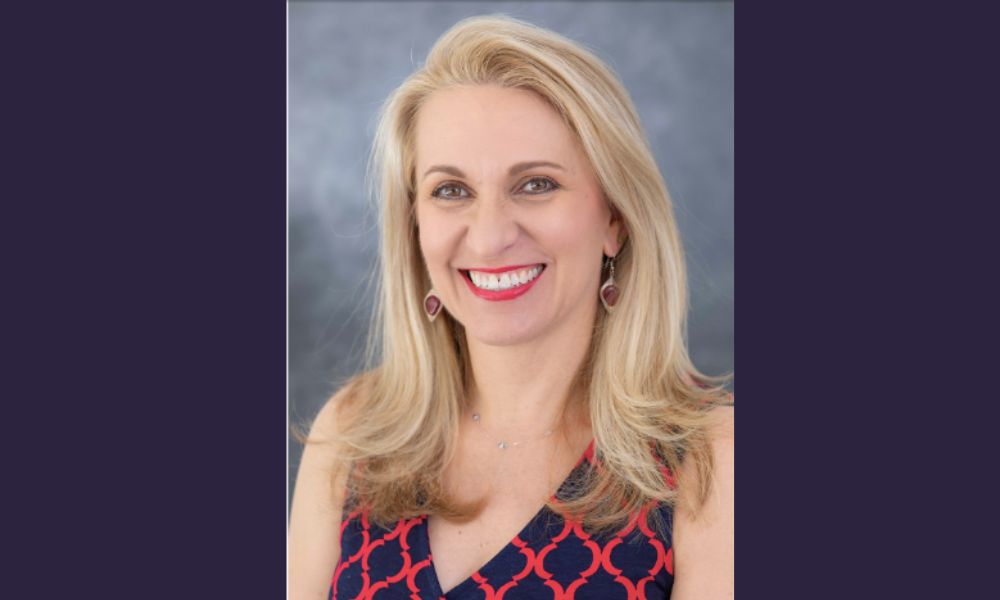
Dr. Chris Sopa, an organizational psychologist with a bachelor’s degree in biology from Bowling Green State University and master’s and doctoral degrees in Organizational Psychology from Capella University — is also a graduate of Life’s School of Hard Knocks.
A series of difficult life events — including her father’s passing in 2007, a divorce in 2008, and a beloved daughter’s struggle with heroin use in 2012 — catapulted her into the study of human potential and what it takes for people to thrive.
For the past 20 years, she’s found solace through travel, mindfulness, self-awareness, and self-love — the latter two being key tools that she now helps clients harness for their own empowerment.
Her decades of research and experience have shown her that cultivating self-awareness is key to extracting lessons from life — whatever it decides to throw at us.
She has collected her hard-earned wisdom into three books, including Choosing the Life You Were Born To Live: How Changing Your Thoughts Will Change Your Life, and currently is a lecturer, researcher, and founder of Wayfarer Group LLC.
Ever an adventuress, Sopa recently broke a lease, put all her belongings in storage, and traveled the world for several months. A firm advocate of the importance of emotions, she up and acted for that trip from a feeling, which she described in a blog post as a “soul void” — which she defined as “when you feel as if something is missing from your life but you cannot quite put your finger on what it is.”
“The only thing that made me feel somewhat satisfied and a bit fuller was when I traveled,” she continues in the post.
Sopa caught up with me over Zoom in December 2023. We actually didn’t have much time to chat about all of her travels, so passionate were we to discuss self-awareness and how it can help people reach their unique potentials, so please also check out her blog, “The Traveling Psychologist” here.
The following Q &A combines our interview and, where noted, some excerpts from that excellent blog and has been edited for length.
To learn more about or connect with Dr. Chris, check out her website here, on LinkedIn, or on Instagram. You can also read a chapter from Choosing the Life You Were Born To Live here or order the entire book here (or on Amazon here).
A Q+A with Dr. Chris Sopa

Can you share more about how you ended up studying human potential?
It’s been quite a journey! I was working in a corporate environment, and my life was moving very fast. I had a very different mindset then; I cared a lot about what other people thought. I was unhappy in my life and marriage, and in 2007, my father passed away. In 2008, I divorced. In 2012, my daughter was struggling with heroin use.
It all caught up to me and showed up in my gut. I ended up with ulcerative colitis. The doctors wanted to put an ostomy bag on me — at age 33 — and I thought to myself, “I can’t let them do that. I’ll die in five years.” I felt it in my bones.
I felt like I had created this illness, with my mindset. I figured it had to go the other way. I went to my doctor and said that I didn’t want to be on medication. One of the striking things I remember was the doctor saying to me, “You can’t control this. It’s going to be with you for your whole life.”
I had no coping method at the time — other than staying busy. I started looking at my beliefs and studying how I could treat my gut. I looked into Ayurvedic medicine and the foods I could eat to support my health. It was hard, but in honoring what I felt I needed to do, I felt an inner peace, and that was a great feeling.
I decided from that time on to use that as a mantra when making decisions. Anything that didn’t bring me inner peace was a “No.” Anything that felt like it could bring me inner peace — no matter how scary it might seem — was a yes. I quit my corporate job, and I started my business. I figured it out as I went.
A question I now ask my clients is, “If you could only feel one emotion for the rest of your life, what would it be?” The answer often points to what drives a person and to that person’s purpose.
My inner peace, well-being, and growth are my priority. Unfortunately, sometimes that means I have to let go of people who are not part of that journey.
This year, in February, I almost died following a back surgery — so the life events haven’t stopped. But I have been blessed with grit, and when something happens to me now, I have more resources to deal with whatever comes my way. My story is that I am a teacher, and I can use what I go through, learn from it, and help others with it so that they have more tools than I had.
There are so many definitions out there about what constitutes “potential.” How do you define it?
I believe we all have to define “potential” for ourselves, because we all have our own stories and experiences, and every day is a new day. My potential for today, if I have a migraine, will be very different from my potential from yesterday, when I didn’t. A big part of each day involves how we process the lessons that come up.
When I speak with clients, the hardest question for them is “What do you want?” People hesitate. They know what they don’t want, but they don’t know what they do want. A lot of people also confuse potential with productivity.
Often, purpose and potential can be tied to the things that bring you joy.
You are known for helping people tune in to the junction between the head, heart, and intuition — but those are often presented as being at odds by society. Thoughts?
A lot of people don’t know what their intuition is, or they don’t trust it or their feelings. For a lot of people, they only trust logic. But we have both for a reason.
I often tell people, “All of the decisions you make in life are based on emotion.” And you know what the No. 1 reaction is? People try to defend logic. I’m not against logic, but there has to be a balance of logic and the emotional.
As an example, many of us have walked away from a job — and there may have been logical reasons. But if you think back in your life to one of those times, chances are that your ultimate decision started with a feeling that something had changed. And then logic comes in to help you figure it out.
So when I talk with people about the importance of emotion, I tell them, “You don’t have to agree with me.” But I ask them to sit with that statement — what if everything I do is based on emotion?
Emotion can be a powerful tool for self-awareness. Can you speak to why self-awareness is so important in today’s society, and why people should give themselves permission to invest in becoming more self-aware?
Self-awareness is key to everything, because you can’t change something if you are not aware of it. Part of self-awareness involves questioning your beliefs — and that can have a domino effect. Unfortunately, usually we don’t change until the pain is more than the fear of being as we are.
It’s important to note that the goal of any development is not to change the core of who you are. We can grow, but I am who I am for a reason. Often self-awareness involves looking at what needs to shift, such as our roles or environments.
It’s good to ask, “Am I in the role and environment that allows me to use my strengths and be my best self, or am I in an environment that drains me?”
How can self-awareness help us maintain our personal power, even during life’s difficult moments?
Self-awareness of how you can keep your “power” (which can be a loaded word) is thinking about: Where do you lose your power, who do you give your power to, and how do you call it back? We can lose our power to people, places, or things that trigger us.
I’ll give an example from my life. My mother yelled a lot growing up. So if people yell or raise their voices at meetings, I become like a child again; I can just feel myself curling up into a little ball. So that’s when I turn to my coping skills and the immediate things I can do. In the moment of the meeting, I try to ground myself: I make sure that my feet are planted firmly on the ground, I practice deep breathing, and I’ll use one of my mantras, such as “You are safe.”
Then, after the meeting, I look at the other things I can do. I love music. For other people, it might be organizing, or their pets, or getting outdoors. Whatever it is, stop for a second and reground yourself, because you can’t think logically when you are not grounded.
The things that bring you joy will help you call your power back.
What are some immediate steps you share with people for how they otherwise can be more aware and in the moment?
How you build self-awareness with people is often by starting small. If I’m working with clients on the skill of active listening, we will look at some small things they can immediately do. For example, I will tell them to put their phones away – not just down on the table. If the phone is on the table, you are sending a message that the person in front of you is not the priority, because as soon as your phone rings or you get a notification, you’re going to pick up that phone and look at it. Often self-awareness requires for people to slow down.
Your blog, “The Traveling Psychologist,” points to your love of world travel, including leading tours to Peru alongside a local Q’ero guide. Can you share more about your experiences and how travel can aid self-awareness and personal growth?
We can learn lessons in the United States, with all the freedoms we have. (From her blog) But there are times in our lives where the lessons that we are ready to learn cannot be learned in the place we reside. This can mean your home base, your job, or your relationship.
With travel, I always wonder how I am going to be in a different place. Traveling really brings up reflection around “How grounded am I, in who I am?”
When I travel, I choose where I am going to go by where I am feeling drawn to go. I also pay attention, and if I see anything repeat, that’s a good indicator that there may be something there for me.
I’ve been to Peru five times. I used to take groups there for 12 days alongside a local shaman, and so many people have asked me about that recently that I will probably do another trip soon.
While experiencing the local tradition and ceremonies of a different culture, people often begin to see their life through a new lens, and a door for transformation opens.
Please touch on the importance of self-care — whether that’s investing in transformative travel or 10 minutes a day to pause and take what they need to re-ground?
Often, people take themselves for granted. We tend to think that we can just push the hard things aside and keep going on with our busy lives. I’m here to tell you that it will all catch up to you.
Self-care and compassion are so important. What we value, we take care of. So if you’re not taking care of yourself, you may want to ask whether you value yourself. And if you don’t value yourself, you should start there — because we can’t take care of anyone else if we are not valuing and taking care of ourselves.
It is the least selfish thing you can do to focus on taking care of yourself, because the better you are, the better everyone around you will be.
 Compassionate Coexistence
Leave a comment